
We all know the story. You’ve seen it in a dozen holiday movies and read it in countless beach-read paperbacks: a burnt-out, highly stressed city executive inherits a quaint country property, moves to a picturesque small town, falls in love with a flannel-wearing local, and discovers the true meaning of life.
It is a comforting, deeply marketable fantasy. But what happens when the protagonist is dragged into that quaint country life kicking, screaming, and nursing a vodka hangover?
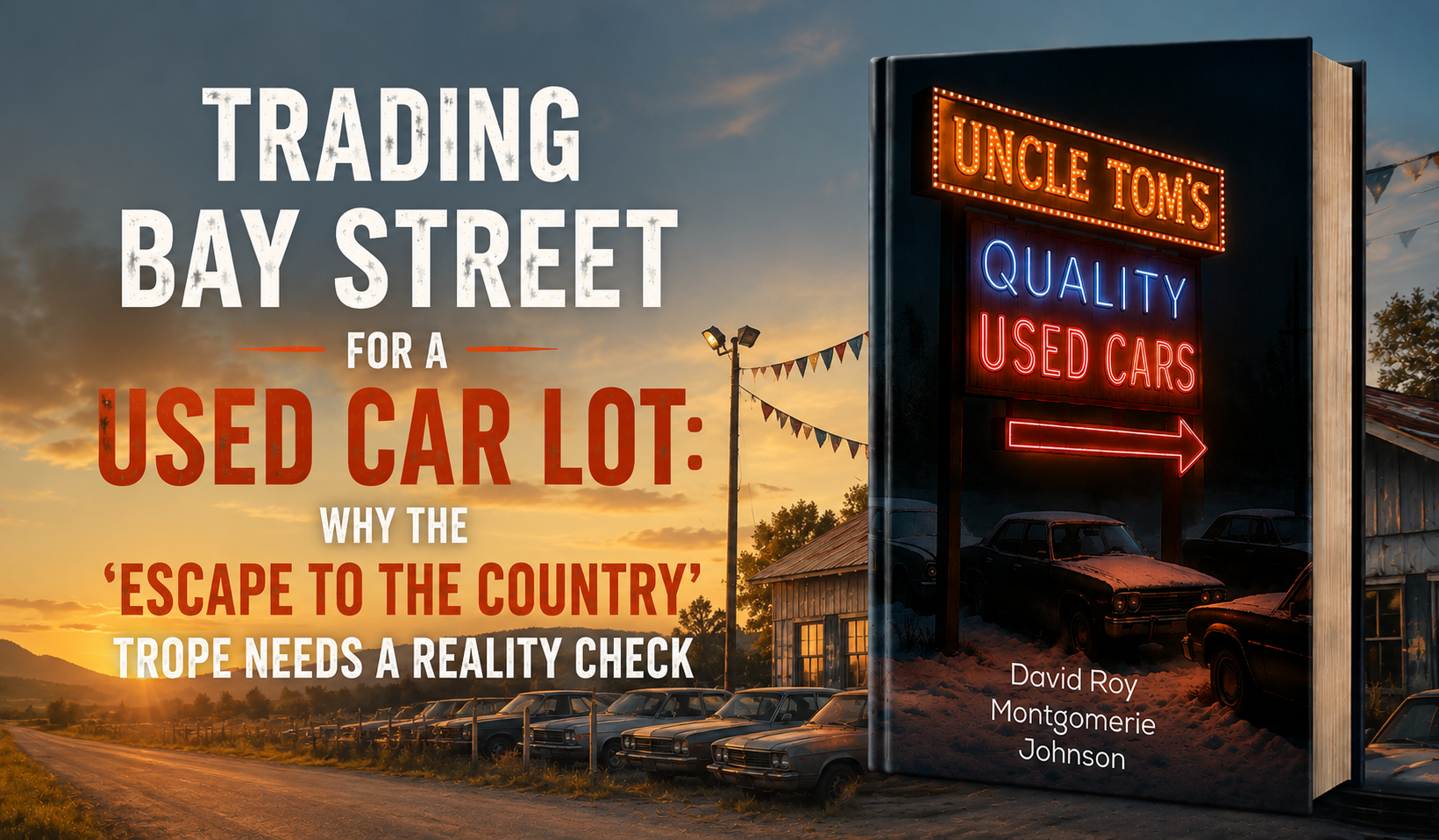
In David Roy Montgomerie Johnson deeply affecting and darkly hilarious novel Uncle Tom’s Quality Used Cars, the city-to-country redemption arc gets a much-needed, spectacularly messy reality check. Through the character of Millie Lange, Johnson dismantles the clichés of rural salvation, offering readers a heroine who is cynical, fiercely independent, and wonderfully flawed.
The Armor of the Concrete Jungle
When we first meet Millie, she isn’t looking to be saved. She is navigating the sterile, high-pressure ecosystem of Toronto’s Bay Street financial district, working a banking job she despises for a boss who makes her skin crawl. To cope, Millie has built a fortress of apathy. She numbs the quiet desperation of her life with cold white wine, late-night bar crawls, and a string of forgettable romances.
Toronto is loud, smelly, and isolating, but as Millie poignantly observes, that isolation is the point. A city of a million strangers allows a girl to keep her deepest fears and unprocessed grief locked safely away in the back of her mind. The city demands nothing of her soul.
But then, her beloved Uncle Tom passes away and leaves her his entire estate—a trailer park, pristine waterfront acreage on the Bruce Peninsula, and a gravel-paved used car lot in the fictional town of Bird in Hand Bay.
A Posthumous Trap
If this were a standard genre trope, Millie would immediately see the charm of the used car lot and eagerly embrace her new life. Instead, she views the inheritance as a massive inconvenience. Her Uncle Tom, operating as a benevolent provocateur from beyond the grave, knows exactly who his niece has become. He deliberately locks the assets in a complex web of trusts. To get the money, Millie is forced to actively manage the businesses and take care of the marginalized tenants who rely on them.
Millie is furious. She fully intends to outwait the legal restrictions, sell the land to developers, and take the cash back to her miserable city life. But redemption, as Johnson masterfully illustrates, rarely arrives in a single, cinematic epiphany. It sneaks up on you.
Finding Grace in the Gravel
Millie’s transformation is slow, grudging, and beautifully authentic. She doesn’t suddenly learn how to bake pies or chop wood. Instead, she starts by moving into a vacant, buttery-yellow trailer, realizing it has a kitschy charm her cramped Toronto basement lacked. She begins to form real, unfiltered connections with the town’s misfits: Lisa, the unapologetic landscape painter and part-time stripper; Bernie, the charmingly slick local lawyer; and Mato, the one-armed Indigenous car detailer who serves as the town’s quiet moral compass.
The ultimate subversion of the trope happens when Millie finally steps onto the used car lot as its owner. Bay Street was a world of abstract wealth, built on moving invisible money to protect the privileged. The used car lot is tangibly, beautifully real. It’s about assessing the worth of a beat-up ‘76 Monte Carlo. It’s about providing affordable, recycled transportation to people who genuinely need it. It’s about honest commerce.
The Verdict
Uncle Tom’s Quality Used Cars gives us a modern heroine who earns her peace the hard way. Millie Lange’s journey reminds us that true wealth has nothing to do with the numbers in a bank ledger. It’s found in the people you stand beside, the community you protect, and the courage it takes to finally give a damn.
Ready for a story that breaks the mold? Grab your copy of Uncle Tom’s Quality Used Cars today and take a ride to Bird in Hand Bay. You won’t want to leave.