
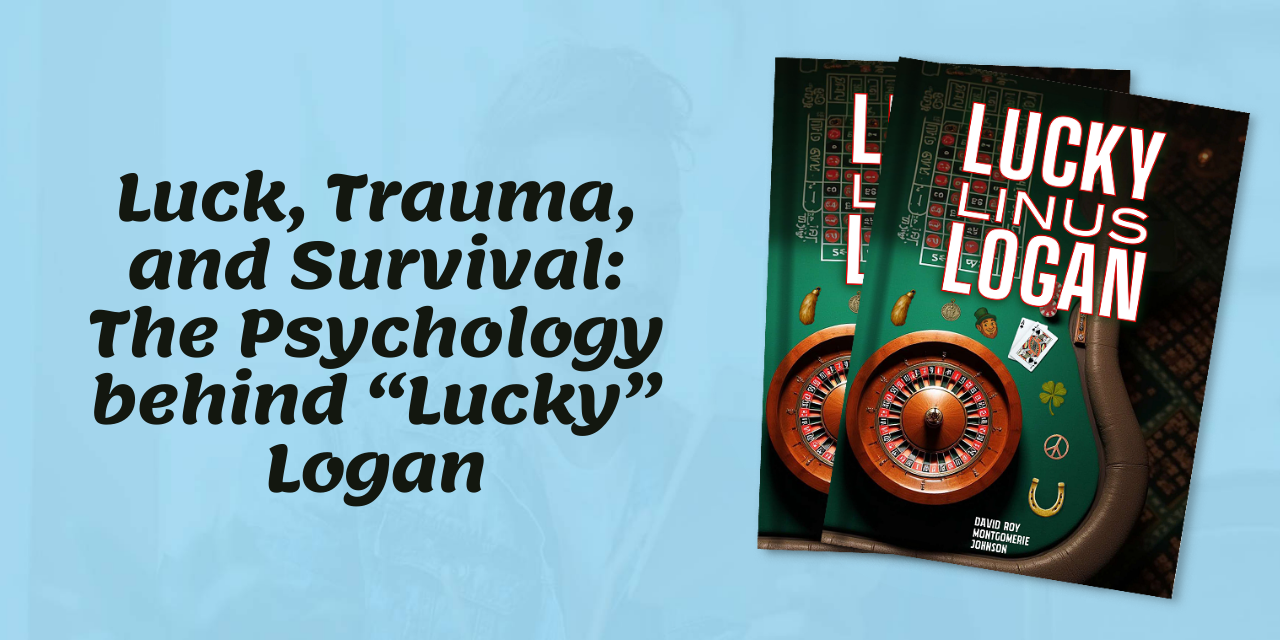
The term “Lucky” is as ironic as it is descriptive. Linus Logan survives situations that would cripple others, yet this survival is not glamorous. His “luck” is less about fortune and more about resilience, endurance, and an intimate understanding of human risk. Beneath the surface, humor and small-town chaos lies a character shaped by trauma and guided by instinctive moral codes.
In this novel, the protagonist has been fortunate enough to escape from horrible incidents in his life. He survived accidents and found happiness right after the pain. It shows his luck stays with him every time and never lets him be disappointed. The character of Linus Logan is very strong from the inside with a solid heart.
Visit: https://davessillybooks.com
Luck versus Resilience
At first glance, Linus’s survival seems improbable, like a string of fortunate escapes from accidents, near-death experiences, and criminal encounters. Yet the novel carefully distinguishes luck from resilience. Luck is chance; resilience is adaptation. Linus endures because he observes, calculates, and acts with a pragmatism honed by experience. His life demonstrates that survival in a dangerous, chaotic environment often depends more on mental flexibility than on random chance.
Early Trauma: War, Loss, and Near-Death Experiences
Linus’s formative years were marked by profound loss. The deaths of his mother and sister in a car accident left him with a lasting sense of absence. Later, his service in Vietnam exposed him to brutality and chaos far beyond the reach of his small-town upbringing. Such experiences created a psychological foundation steeped in unpredictability and fear, teaching him to expect the worst and prepare quietly.
Each trauma layered his perception of risk. Linus becomes hyper-aware of consequences, cautious yet capable of decisive action. These experiences forged a survivor of a man whose instincts are as finely tuned as they are emotionally guarded.
Survivor’s Guilt and Emotional Detachment
A recurring theme in Linus’s psychology is survivor’s guilt. Having lived through tragedies that claimed others, he carries an unspoken burden. This guilt manifests as emotional detachment: he often distances himself from relationships, responsibilities, and attachment to outcomes. Detachment becomes a coping mechanism, allowing him to function where others might be paralyzed by fear or grief.
Yet this detachment is selective. Linus does not shut himself off entirely; he reserves his concern for situations where he can act meaningfully, especially when protecting those unable to defend themselves.
Humor as Armor against Pain
Humor in Lucky Linus Logan is never frivolous. Linus uses wit and understated irony as armor, deflecting the weight of trauma while maintaining agency in chaotic environments. Jokes, sarcasm, and self-deprecation are survival tools, a way to assert control when external circumstances feel overwhelming.
This coping mechanism allows him to engage with difficult realities without succumbing to despair. It is also a social tool, smoothing interactions in a community rife with tension, mistrust, and unspoken histories.
How Past Violence Informs Present Restraint
Despite his exposure to violence, Linus is neither impulsively aggressive nor reckless. His experiences teach that force often creates more problems than it solves. He responds with caution, observation, and strategic action. Past trauma cultivates restraint; he understands when inaction is safer than confrontation, and when intervention is morally necessary despite personal risk.
This restraint contrasts with other characters who pursue conflict for profit, status, or ego, highlighting Linus’s moral and psychological growth.
Logan’s Instinct to Protect the Vulnerable
Perhaps the most defining feature of Linus’s survival psychology is his instinct to protect those who cannot protect themselves. While he may avoid unnecessary risk, he consistently draws ethical boundaries. Children, victims of abuse, and those exploited by the criminal world evoke a protective response that overrides self-interest. This selective empathy illustrates a nuanced moral compass: Linus acts not because he is fearless, but because he perceives responsibility as inseparable from survival.
The Cost of Always Being the One Who Survives
Living as “the lucky one” carries its own burdens. Linus experiences fatigue, isolation, and a pervasive awareness of mortality. Survival exacts emotional and psychological taxes: constant vigilance, mistrust, and the ever-present possibility of failure. The community may admire him, but admiration does not erase the subtle, cumulative toll of a life repeatedly spared from disaster.
Luck as Endurance, Not Fortune
Ultimately, Johnson reframes luck in Lucky Linus Logan as endurance rather than mere fortune. Linus Logan survives not because the universe favors him, but because he has adapted, learned, and endured. His heroism is quiet, human, and accidental. It is measured not in triumphal victories but in his ability to navigate life’s unpredictability without succumbing to despair or moral compromise.
“Lucky” is, therefore, a psychological portrait of resilience: a man whose survival is earned, whose luck is lived, and whose endurance transforms ordinary experiences into a complex moral and emotional narrative. In Linus Logan, readers find a hero who embodies the often-overlooked virtues of persistence, prudence, and subtle moral courage.